
Michael Mendez
design.mikemendez@gmail.com
Package Product Pages
Role: Lead Product Designer
Team: Cross-functional (PM, Engineering, Stakeholders)
Timeline: ~3 months
problem
Shoppers had no easy way to purchase multiple items at once. Buying a bundle meant visiting each product page individually and adding items to the cart one by one. It was frustrating and it made it nearly impossible for the e-commerce team to merchandise bundle deals effectively.
solution
This project didn't call for a ground-up redesign, and that was intentional. We had a proven page architecture shoppers understood. The design challenge was making it work for a different buying scenario: multiple products, one purchase.
I started by researching design patterns and used those references as a foundation. We focused our energy on validating comprehension through UserTesting.com and refining the design until we landed on an MVP that both shoppers could easily use and the merchandising team could author.
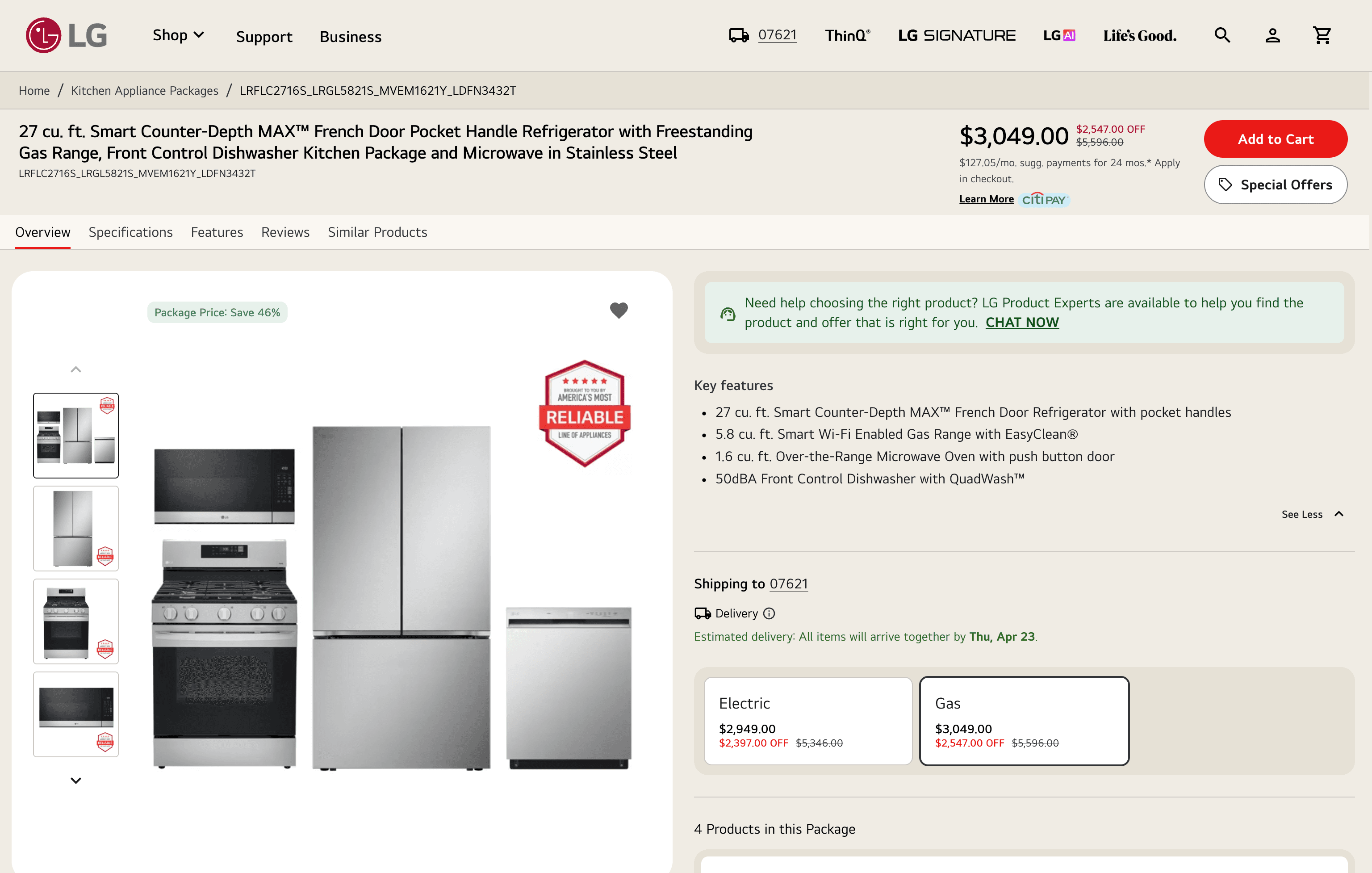
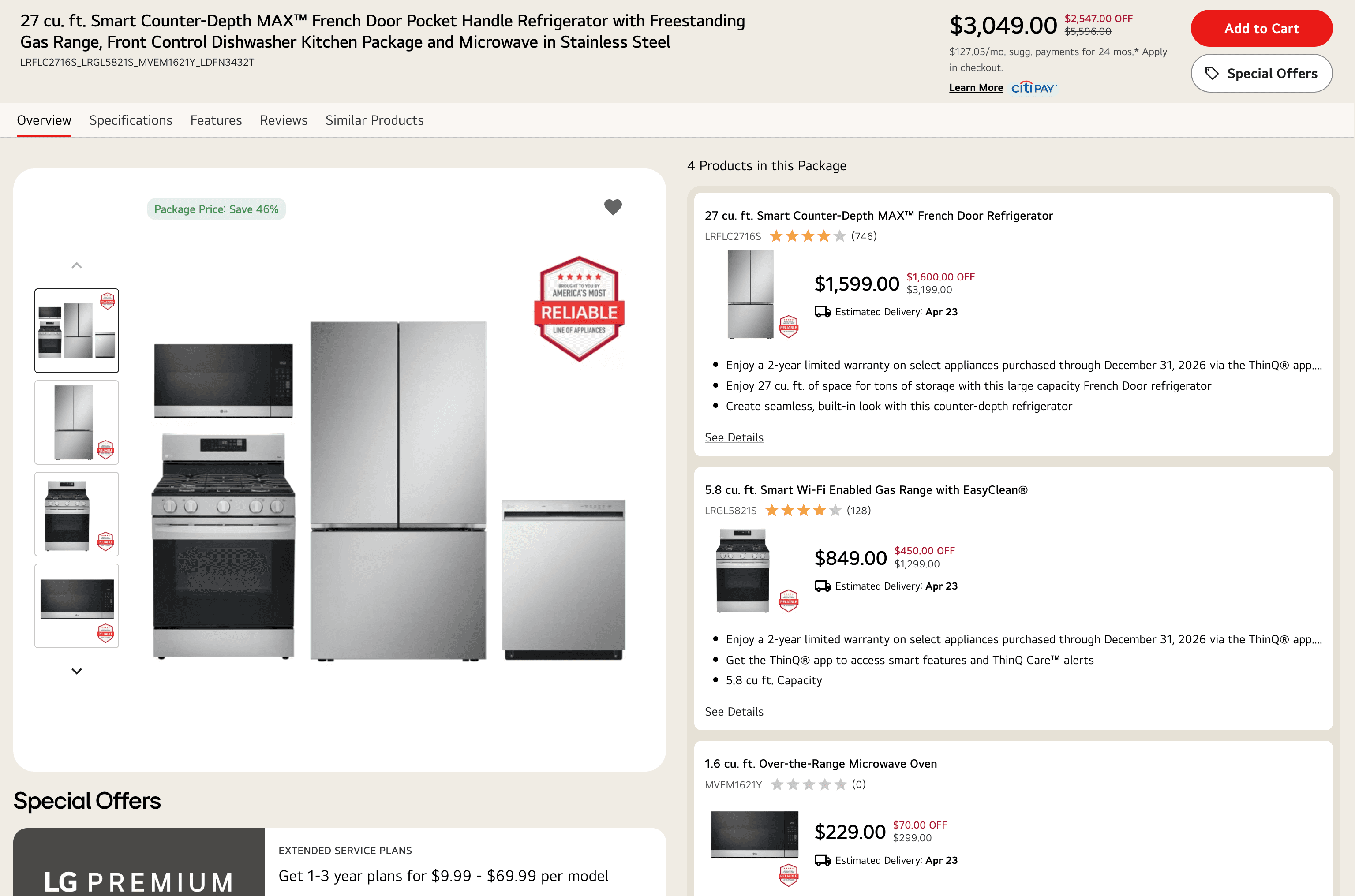
The page clearly communicates what's included in the package and the delivery date. We modified the delivery message to indicate that all items would be delivered together, and added individual product cards to the buy rail so shoppers could understand what's in the bundle, the price, and key features. If they needed more detail, they could open any product page in a new tab.
A package can't ship incomplete, so if one item goes out of stock the purchase is blocked. The job was making that clear early instead of at checkout. I flagged the unavailable item in the buy rail, added a banner explaining why, and gave shoppers a Notify Me option.
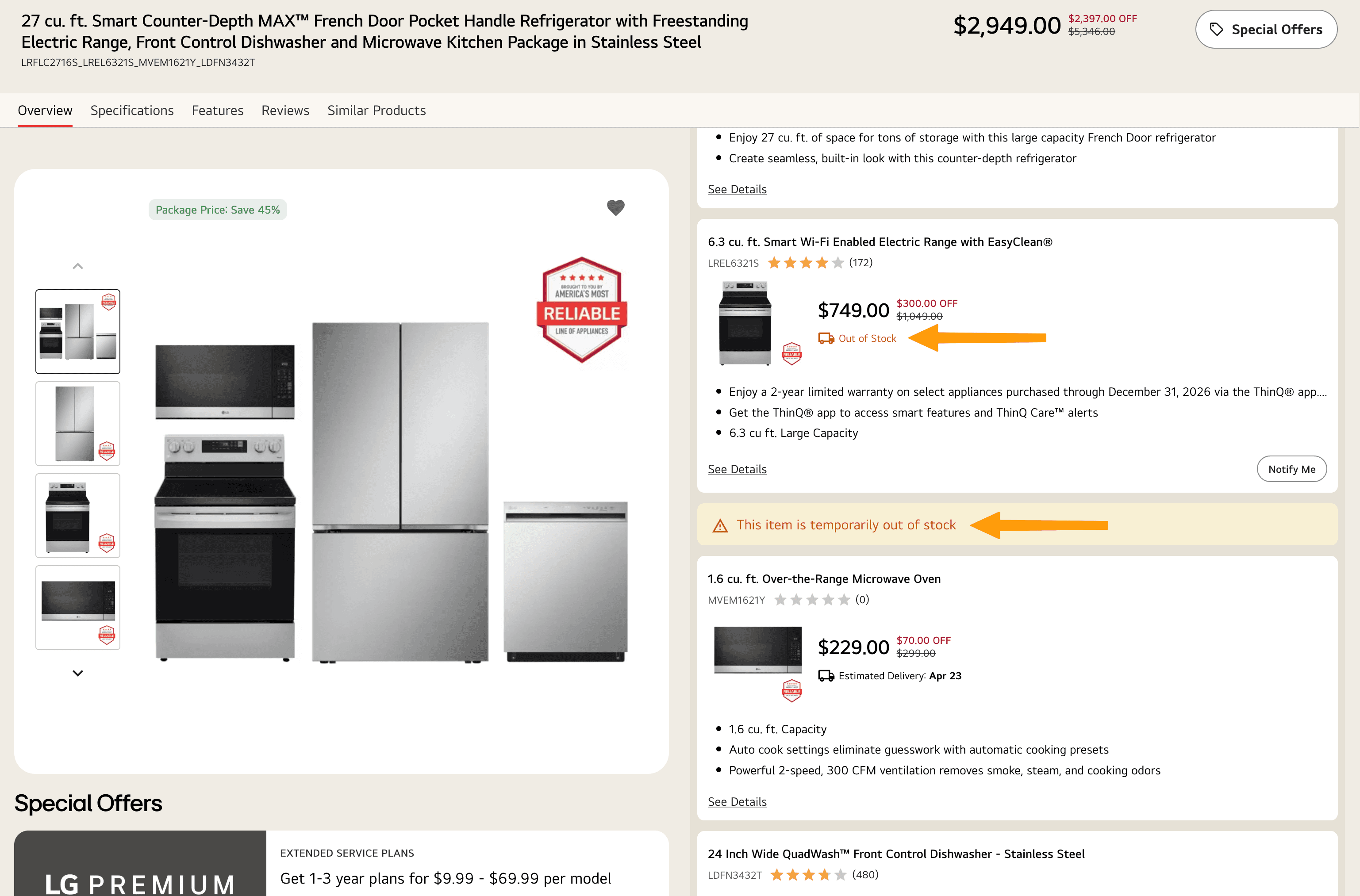
As shoppers scrolled below the buy rail, I designed a sticky nav that let them toggle between package items and browse specs, reviews, and features without navigating away.

~190 appliance packages sold in the first two weeks, in a category that had no way to buy bundles online before this.
What I learned
The complexity wasn't designing for shoppers, it was designing something our internal teams could manage and author. Working through package types, availability edge cases, and variant scenarios took more effort than the shopper-facing design did.