
Michael Mendez
design.mikemendez@gmail.com
AI Comparison Summary
Role: Lead Product Designer
Team: Cross-functional (PM, Engineering, Stakeholders)
Timeline: ~3 months
problem
Comparing products on LG.com was an overwhelming experience. The amount of spec data involved made it difficult for shoppers to find what they needed to make a decision. By digging into the data, it became clear that most shoppers were consistently looking for the same types of information when comparing products.
SOLUTION
We weren't confident how well this would work, so we A/B tested the feature before committing, limiting the test to the most compared products as a baseline. Working from the insights team's data, we identified what should populate the AI-generated comparison summary. From there AI handled the heavy lifting, translating spec-heavy information into clear, consumer-friendly comparisons. After a month of testing the results were hard to ignore.
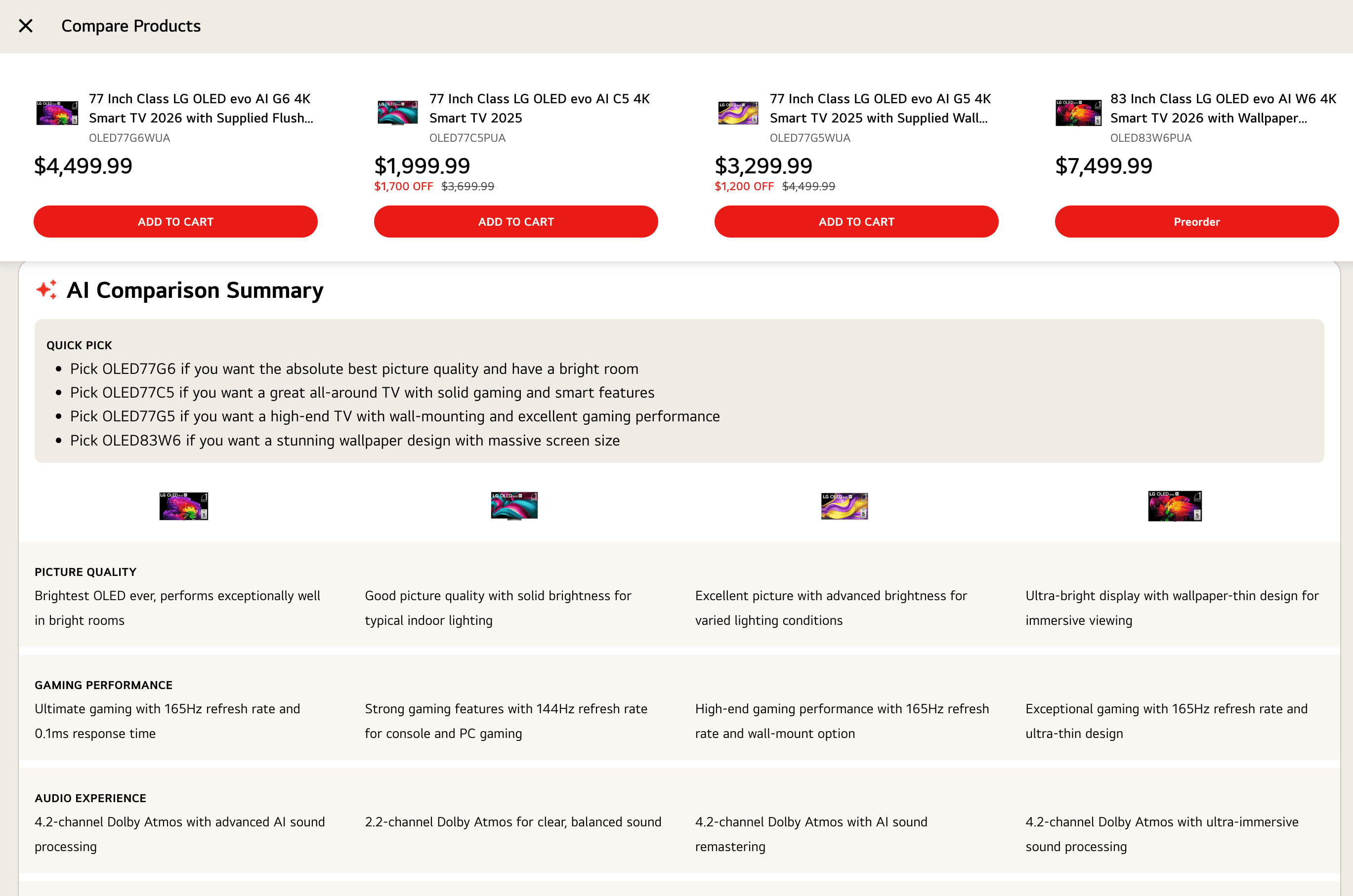
Add to cart increased 11.56%, conversion 25.22%, and average order value 25.48% against the control in testing.
We included a "Quick Pick" to help shoppers identify which TV matched their watching style, whether that was gaming, cinematic, or high-end design. Below that, the four most sought-after categories for TVs: picture quality, gaming performance, audio experience, and design, each showing how the compared models stacked up. A shared features section rounded it out, highlighting what was available across all products.

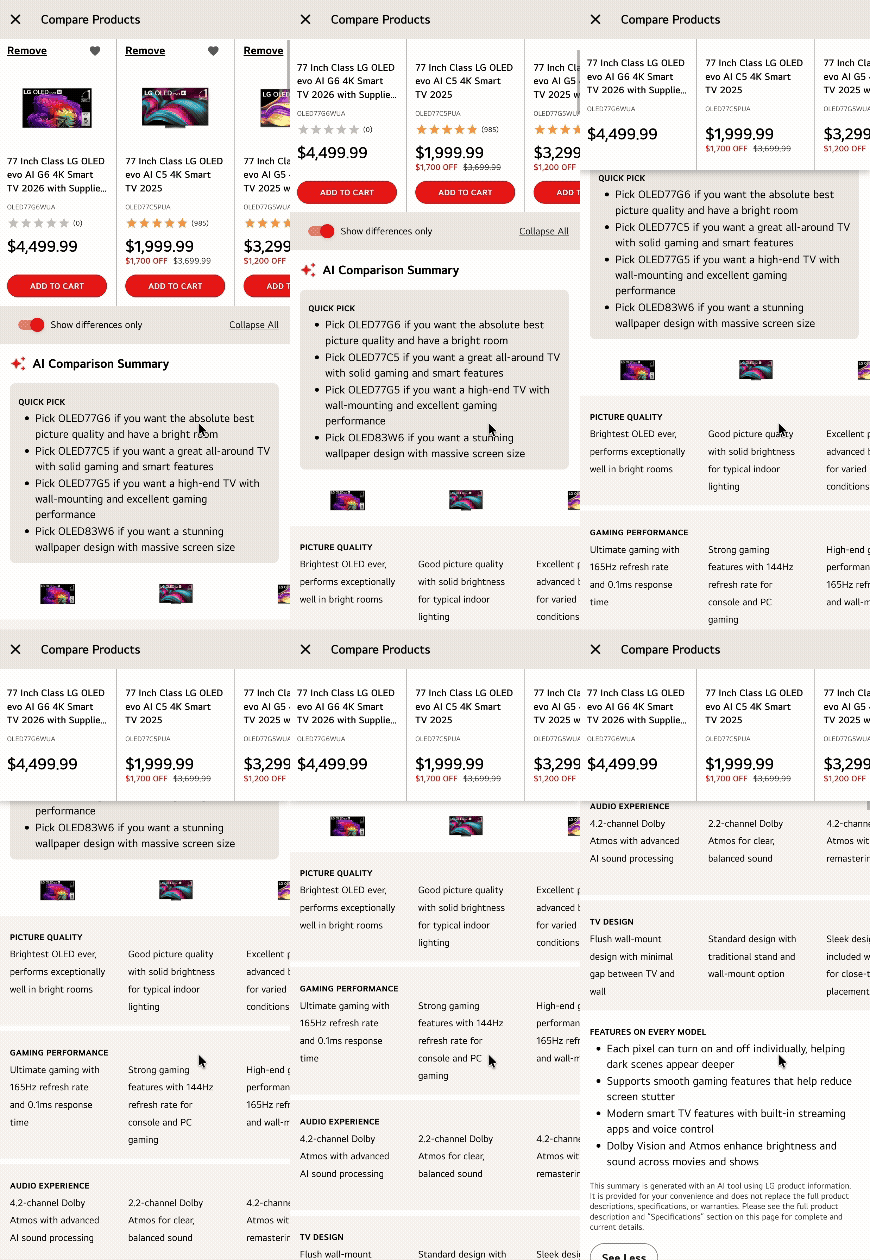
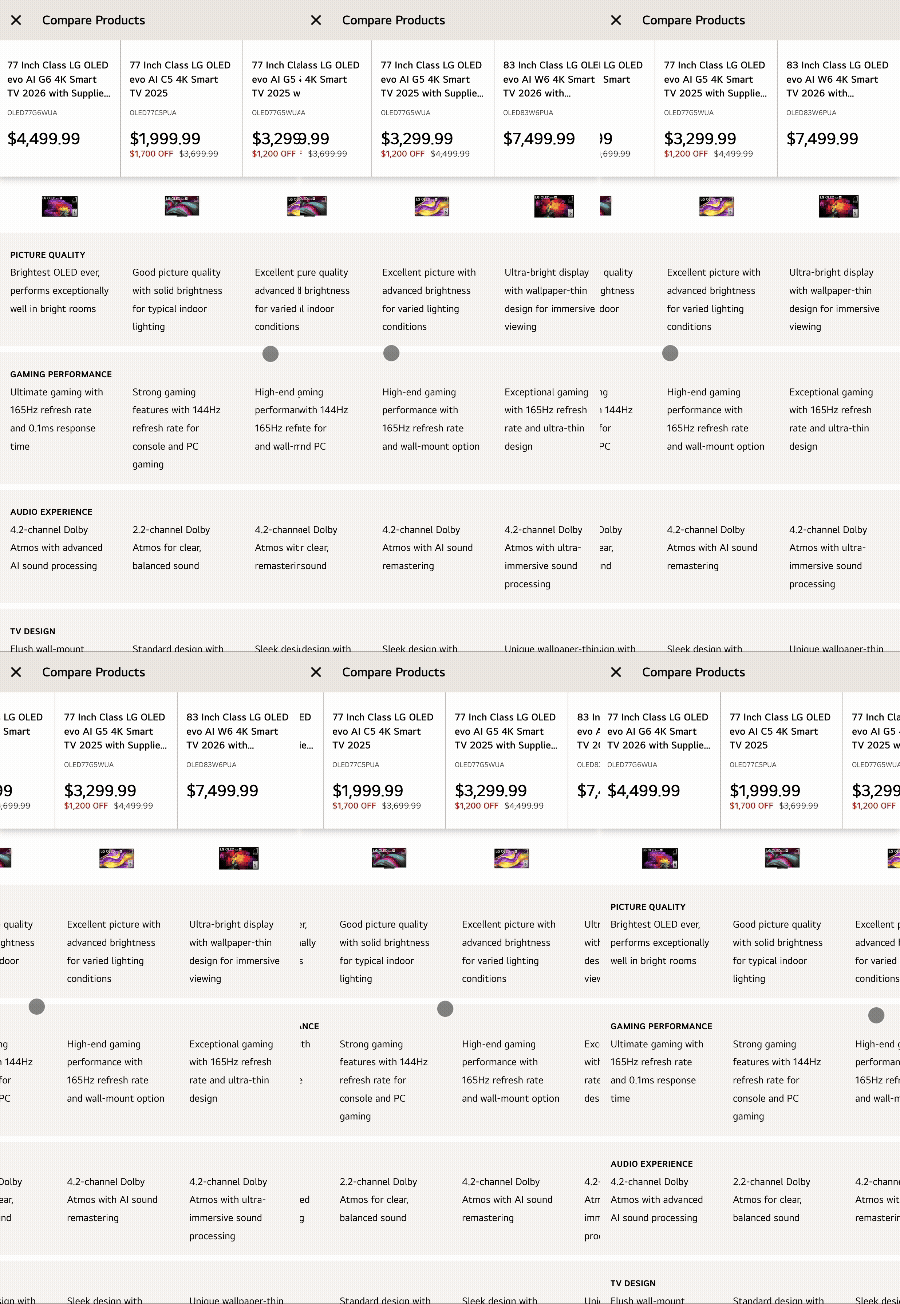
The comparison feature received buy-in from leadership and is now live at scale.
What I learned
The biggest challenge we ran into was flawed spec data, which led to inaccurate AI comparisons. It also became clear that specs alone weren't enough. Incorporating key features alongside spec data was essential for surfacing consumer-friendly benefits in a way that actually helped shoppers make a decision.